Radocsai Apiary

Hungarian honey from the beekeeper

Four kinds of honey, four very different characters: from mild acacia through creamy sunflower to woodsy honeydew. The same 28 bee colonies, different flowers.

3 generations of beekeeping From our own apiary
Hungarian acacia honey from Radocsai Apiary

The apiary in numbers

In its whole life a bee gathers about one twelfth of a teaspoon of honey. Behind every jar are the whole lives of thousands of bees and millions of flower visits.

Which honey suits you?

Same colony, different flowers, a very different honey.

Acacia honey

Our most popular

Almost water-clear, mild and gently floral. It stays liquid for a long time, so it is a favourite of tea drinkers and people new to honey.

Flavour intensity

1/5

Speed of crystallisation

1/5

Good with: tea, pancakes, sweetening

Spring blossom honey

Maglód spring

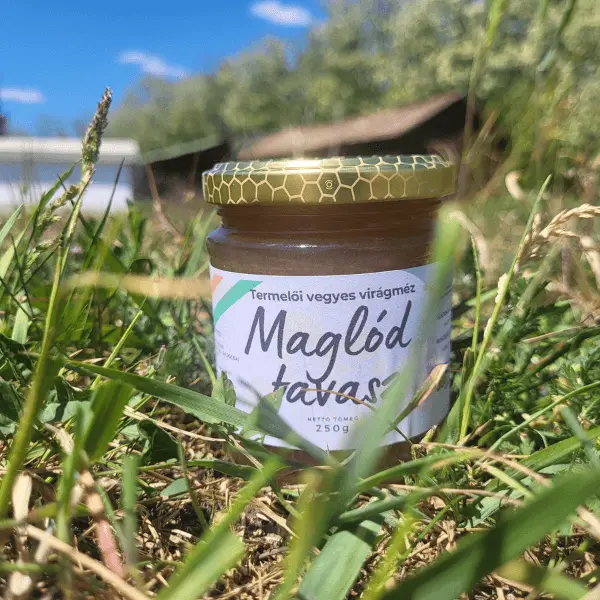
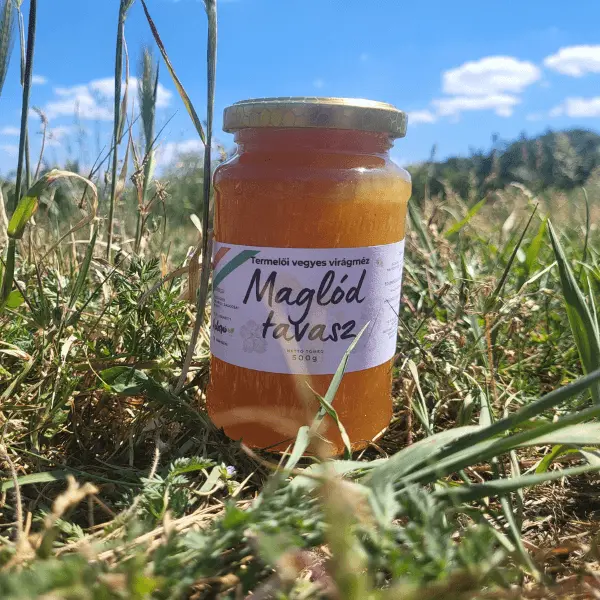
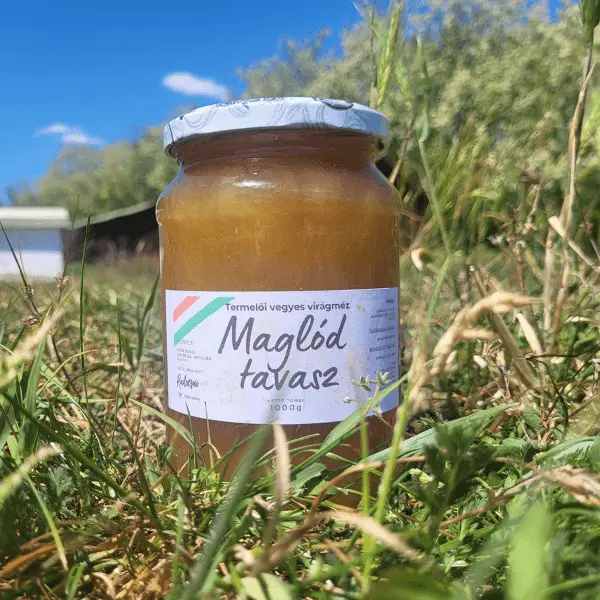
From rapeseed and fruit tree nectar: light, mild and fragrant. It crystallises into a fine, almost white cream.

Flavour intensity

2/5

Speed of crystallisation

4/5

Good with: bread, yoghurt, breakfast

Sunflower honey

Creamy

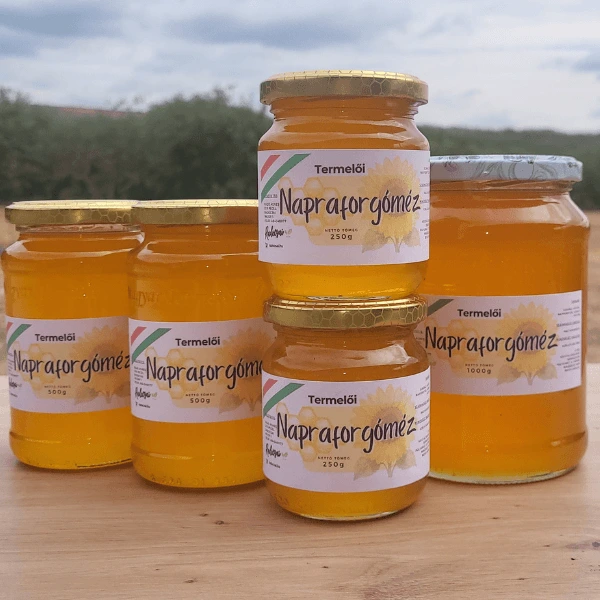
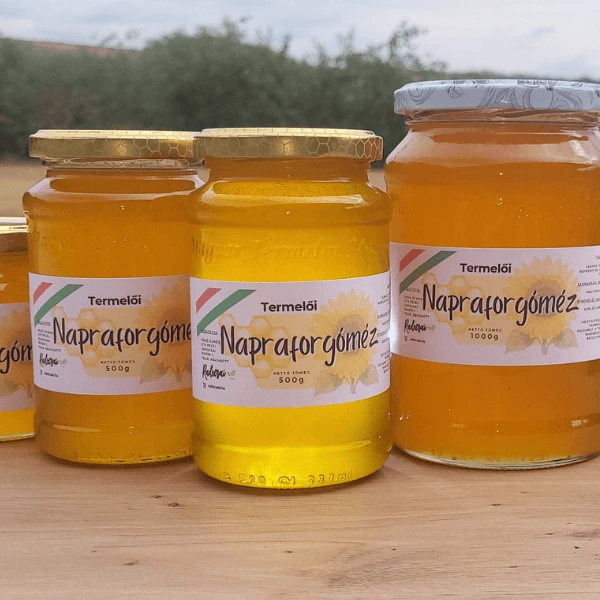
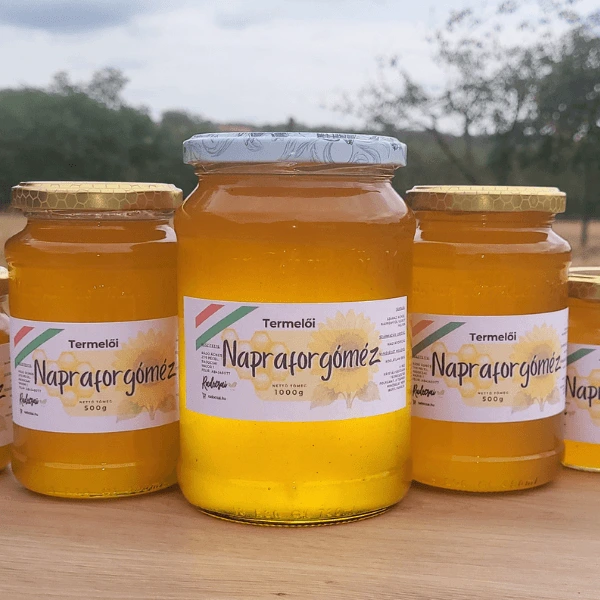
Golden yellow, slightly fruity and floral. It quickly crystallises to a cream, so it does not drip: the best friend of buttered bread.

Flavour intensity

3/5

Speed of crystallisation

5/5

Good with: buttered bread, porridge, baking

Blossom honey with honeydew

Full-flavoured

Darker, full-bodied and slightly spicy. As well as flower nectar it contains forest honeydew, which gives it a deep, woodsy flavour.

Flavour intensity

5/5

Speed of crystallisation

2/5

Good with: cheeseboards, marinades, salad dressings

Cannot decide? Choose three different 250 g jars and taste them side by side. It is the quickest way to find out who likes which, and it makes a lovely tasting gift too.

Our honey

Small Honey Bear Acacia Honey 70 g

590 HUF / pc

Unit price: 8,429 HUF / kg

Honey Bear Acacia Honey with Drip-Free Cap 370 g

2,290 HUF / pc

Unit price: 6,189 HUF / kg

Acacia Honey with Drip-Free Cap 500 g

2,990 HUF / pc

Unit price: 5,980 HUF / kg

Hungarian Acacia Honey 250 g

1,490 HUF / jar

Unit price: 5,960 HUF / kg

Mixed Blossom Honey with Forest Honeydew 250 g

1,290 HUF / jar

Unit price: 5,160 HUF / kg

Hungarian Sunflower Honey 250 g

1,190 HUF / jar

Unit price: 4,760 HUF / kg

Maglód Spring Mixed Blossom Honey 250 g
Only 2 left

Maglód Spring Mixed Blossom Honey 250 g

1,190 HUF / jar

Unit price: 4,760 HUF / kg

Hungarian Acacia Honey 500 g

2,790 HUF / jar

Unit price: 5,580 HUF / kg

Mixed Blossom Honey with Forest Honeydew 500 g

2,490 HUF / jar

Unit price: 4,980 HUF / kg

Hungarian Sunflower Honey 500 g

2,190 HUF / jar

Unit price: 4,380 HUF / kg

Maglód Spring Mixed Blossom Honey 500 g

2,190 HUF / jar

Unit price: 4,380 HUF / kg

Hungarian Acacia Honey 1000 g

5,500 HUF / jar

Unit price: 5,500 HUF / kg

Mixed Blossom Honey with Forest Honeydew 1000 g

4,800 HUF / jar

Unit price: 4,800 HUF / kg

Hungarian Sunflower Honey 1000 g

3,990 HUF / jar

Unit price: 3,990 HUF / kg

Maglód Spring Mixed Blossom Honey 1000 g
Only 1 left

Maglód Spring Mixed Blossom Honey 1000 g

3,990 HUF / jar

Unit price: 3,990 HUF / kg

We are a family farm first

We produce honey mainly for ourselves and sell only the surplus, so some products can sell out quickly. We restock what we can: if something is out of stock, check back later or write to us.

Do not give honey to children under one year old!

Honey is the most common source of infant botulism: its spores can produce toxin in a baby's immature gut. So do not give honey in any form to a baby under one, even baked or cooked into food or just on a dummy. Source: recommendation of the Hungarian National Food Chain Safety Office (Nébih), Veszélyzóna (in Hungarian).

Crystallisation is not a fault

The question we get most often: "My honey has crystallised, has it gone off?" No. Crystallisation is a natural process: the glucose in the honey separates out and forms tiny crystals.

When it happens depends on the kind of honey: sunflower and rapeseed spring honey turn creamy within a few weeks, while acacia can stay liquid for a year or two because it contains more fructose.

To make it liquid again: stand the open jar in a lukewarm water bath and stir. The water should not be above 40 °C, and never heat honey in a microwave or directly on the hob.

What to pair it with

Tea, not too hot: stir in acacia honey once the tea has cooled to drinking temperature, so the aroma stays.

Cheeseboard: mature cheese, walnuts and a spoonful of honeydew honey. It is full-bodied enough to stand up to strong cheeses.

Breakfast: yoghurt or porridge with fruit and spring blossom honey, or buttered bread with creamy sunflower honey.

Cooking and baking: honey and mustard marinade, salad dressing or gingerbread. In baking, honey gives a nicer colour and a softer crumb than sugar.

Taste with your senses

This is how beekeepers taste honey, and how you can too at home.

1.

Colour

Look at it against a white background: every shade from water-clear to amber promises something different.

2.

Aroma

Smell it over the open jar. Blossom honey is fragrant, honeydew honey woodier and deeper.

3.

Texture

Runny, creamy or grainy? Crystallisation tells you about the kind of honey, not its quality.

4.

First taste

Let it melt on your tongue and do not swallow straight away. This is when the sweetness and the flowers come through.

5.

Aftertaste

How long does it last, and what stays? This is where full-flavoured honeys show themselves.

Since 2023, after 3 generations

From our grandfathers' hives to our own

Three generations of our family have kept bees, so when we started in 2023 we were not starting from scratch. All 28 of our colonies live in Pécel, at Radocsai Farm.

We extract and jar the honey ourselves: what you see in the jar was gathered by our own bees.

More from the hive

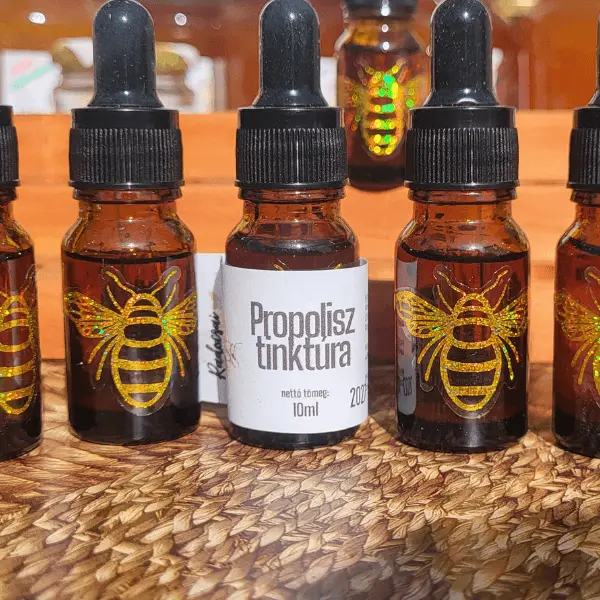
A tincture made from our own propolis.

Propolis Tincture 10 ml
Only 1 left

Propolis Tincture 10 ml

2,490 HUF / jar

Unit price: 24,900 HUF / 100ml

Frequently asked questions about honey

My honey has crystallised. Has it gone off?

No, this is how honey naturally behaves and it takes nothing away from it. If you prefer it liquid, stir it in a lukewarm water bath of no more than 40 °C.

Which honey stays liquid the longest?

Acacia honey. Its high fructose content means it can stay liquid for a year or two. Sunflower and rapeseed spring honey, on the other hand, turn creamy within a few weeks.

How should I store honey?

Tightly closed, in a cool, dry place away from sunlight, at room temperature. It does not need to go in the fridge. Always use a clean, dry spoon, because honey absorbs moisture and water can make it ferment.

Can I put it in hot tea?

You can, but it is a shame: the delicate aromas disappear in the heat. Wait until the tea has cooled to drinking temperature, then stir it in.

Can I give honey to my child?
Honey must not be given to children under one, as Nébih, the Hungarian food safety office, also recommends (because of the risk of infant botulism, see above). Over the age of one children can have it too, and the Small Honey Bear bottle is just right for small hands and lunchboxes.
What is honeydew?

It does not come from flowers: it is the sweet secretion of tiny insects that feed on tree sap, which bees collect from leaves and bark. Mixed with flower nectar it gives a darker, fuller, slightly spicy honey.

Why does the taste change a little from year to year?

Because honey is a natural product: the weather and the timing and strength of the bloom differ every year. We do not blend it to a uniform taste, so each season's honey has a character of its own.

How can I recognise real honey from a producer?

There are a few simple signs to look out for. We have gathered them in our article on how to spot real honey.