Per the same weight (100 g). Source: USDA FoodData Central[1][2]
In short
- Under EU rules, quail eggs count as high in vitamins B12 and B2, selenium and folate.
- Five quail eggs a day provide about a quarter of the daily requirement for vitamin B12, vitamin B2 and selenium.
- Their protein is better absorbed when cooked, and cooked eggs are also safer than raw ones.
- They are not cholesterol-free and they are not medicine: the regimen is a nutrient-rich habit.


What is in a tiny quail egg?
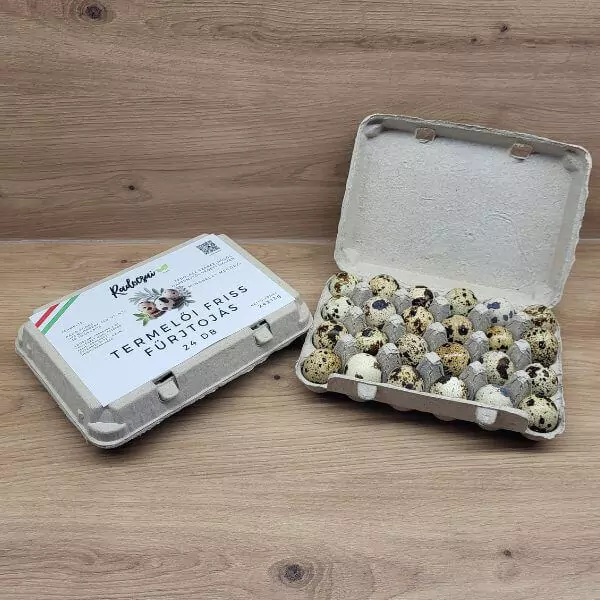
A quail egg weighs 10–13 grams, of which about 9 grams is edible once the shell is removed[1], so roughly five quail eggs equal one hen's egg. It is small, but richer in nutrients for its weight: there is more yolk relative to white, and the yolk holds most of the vitamins and minerals.
The chart gives an honest picture: quail eggs provide much more of many nutrients than the same weight of hen's eggs (twice the iron and nearly twice the vitamin B12), but not of everything. Hen's eggs, for example, contain slightly more vitamin D.
Are they really high in vitamins? Yes, by EU rules too
In the European Union, a food may only be called a "source" of a vitamin if 100 grams provide at least 15% of the daily reference value, and "high" in it if they provide at least 30%[4]. Quail eggs do very well by this measure:
High Vitamin B12 – 63% per 100 g
Contributes to the normal function of the immune system and to the reduction of tiredness and fatigue.
High Selenium – 58% per 100 g
Contributes to the normal function of the immune system and to the protection of cells from oxidative stress.
High Riboflavin (B2) – 56% per 100 g
Contributes to normal energy-yielding metabolism and to the reduction of tiredness and fatigue.
High Folate – 33% per 100 g
Contributes to normal blood formation and to the normal function of the immune system.
High Phosphorus – 32% per 100 g
Contributes to the maintenance of normal bones and teeth.
Source Iron, vitamin D, pantothenic acid, vitamin A
Iron, for example, contributes to the reduction of tiredness and fatigue, and vitamin D to the maintenance of normal bones.
The percentages apply to 100 g of quail eggs (about 11 eggs), based on USDA data[1] and EU reference values[3]. The text in the boxes follows the health claims authorised by the EU[5]. In addition, about a third of the energy in quail eggs comes from protein, so they count as a high-protein food[4].
What do five quail eggs a day provide?
The popular regimen is based on five quail eggs a day. That is about 45 g of edible egg, 70 kcal and 6 g of high-quality protein[1], and it covers a good part of the daily requirement for several important vitamins and minerals:
Myth or reality?
There are plenty of exaggerations about quail eggs online. Here are the ones we want to put right:
Myth "A cholesterol-free diet egg."
Reality: for their weight, quail eggs contain more cholesterol than hen's eggs (844 mg per 100 g, compared with 372 mg)[1][2]. Five quail eggs a day contain about 380 mg. For a healthy person, the overall diet is what matters, but dietary guidelines advise keeping cholesterol intake low within a balanced diet[6]. If you have high cholesterol or heart disease, talk to your doctor.
Myth "15 times more B2 and 6 times more B1."
Reality: by weight, they contain about 1.7 times more B2, 1.8 times more B12, about three times more B1 and twice as much iron as hen's eggs[1][2]. That is excellent as it is, with no need to exaggerate.
Myth "They are best raw, because that is when you absorb everything."
Reality: a stable isotope study found that about 91% of the protein in cooked eggs is absorbed, compared with only about 51% in raw eggs[7]. In addition, the avidin in raw egg white binds biotin (vitamin B7)[8]. So a soft-boiled egg is not a compromise, but the better choice.
Myth "Quail eggs cure 30 diseases."
Reality: there is no reliable clinical evidence behind the list of diseases in old regimen descriptions (asthma, diabetes, high blood pressure, impotence and so on). In the EU, only authorised health claims may be made for food[5]: these are the vitamin claims above. Quail eggs are a nutritious food, not medicine.
What does research say about allergies?
Promising, but limited evidence
Allergic rhinitis
Easing allergies is one of the best-known promises of the quail egg regimen. Two small controlled studies did show favourable results: a powdered quail egg food supplement eased the symptoms of artificially induced allergic rhinitis[9], and in another study, given alongside a nasal spray, it improved the symptoms of seasonal allergic rhinitis[10]. These studies used special preparations with few participants, and the authors themselves say that larger studies are needed. There is no data on whether quail eggs prepared in the kitchen have the same effect.
How the popular quail egg regimen works
The regimen is a long-standing tradition passed on by word of mouth. It is not a medical treatment, just a habit: you eat quail eggs regularly every day for a few weeks. If you make the eggs part of your everyday diet, you get the nutrients above consistently.
25 days
120 eggs
Days 1–2: 3 eggs
Day 3: 4 eggs
Days 4–25: 5 eggs
49 days
240 eggs
Days 1–2: 3 eggs
Day 3: 4 eggs
Days 4–49: 5 eggs
- Who is it for? Adults and healthy teenagers. For teenagers, 3–4 eggs a day are enough.
- How? Soft or hard-boiled, for breakfast, in salads or in soup. You will find the boiling times on our quail eggs page.
- What about raw eggs? According to Nébih, the Hungarian food safety authority, neither the white nor the yolk of an egg should be eaten without heat treatment, as eggs can spread salmonella. This also applies to quail eggs, especially for young children, older people, pregnant women and people with weakened immune systems[12].
Are they good for young children too?
Yes, but only when cooked. According to the UK's National Health Service (NHS), eggs can be introduced to a baby's diet from around 6 months, but quail eggs must be cooked until both the white and the yolk are completely solid[13]. The tiny, speckled egg is a hit with older children too: cut in half and packed in a lunchbox, it is far more exciting than a hen's egg.
Who should take care?
- People with an egg allergy: only with an allergist's approval (see above).
- People with high cholesterol or heart disease: five quail eggs a day mean about 380 mg of cholesterol, so talk to your doctor.
- Young children, pregnant women, older people and people with weakened immune systems: only when thoroughly cooked.
- Never instead of medicine: if you are ill, quail eggs do not replace medical treatment.
Summary
Quail eggs are among the most nutrient-rich eggs: high in vitamins B12 and B2, selenium, folate and phosphorus, with twice as much iron as hen's eggs, all in a few tiny, tasty bites a day. They are not a miracle cure, and they do not need to be. Cooked, eaten regularly and as part of a balanced diet, they are simply a good choice, and the quail egg regimen is a great opportunity to build that habit.
Sources
- U.S. Department of Agriculture: FoodData Central, Egg, quail, whole, fresh, raw (SR Legacy, FDC ID 172191). fdc.nal.usda.gov
- U.S. Department of Agriculture: FoodData Central, Egg, whole, raw, fresh (SR Legacy, FDC ID 171287). fdc.nal.usda.gov
- Regulation (EU) No 1169/2011 of the European Parliament and of the Council, Annex XIII (daily reference intakes). eur-lex.europa.eu
- Regulation (EC) No 1924/2006 of the European Parliament and of the Council on nutrition and health claims made on foods, Annex. eur-lex.europa.eu
- Commission Regulation (EU) No 432/2012 on permitted health claims; EU Register. ec.europa.eu
- U.S. Department of Agriculture, U.S. Department of Health and Human Services: Dietary Guidelines for Americans, 2020–2025. dietaryguidelines.gov
- Evenepoel P. et al.: Digestibility of cooked and raw egg protein in humans as assessed by stable isotope techniques. The Journal of Nutrition, 1998; 128(10): 1716–1722. doi.org/10.1093/jn/128.10.1716
- National Institutes of Health, Office of Dietary Supplements: Biotin – Fact Sheet for Health Professionals. ods.od.nih.gov
- Benichou A. C. et al.: A proprietary blend of quail egg for the attenuation of nasal provocation with a standardized allergenic challenge: a randomized, double-blind, placebo-controlled study. Food Science & Nutrition, 2014. pmc.ncbi.nlm.nih.gov
- Andaloro C. et al.: Quail egg homogenate with zinc as adjunctive therapy in seasonal allergic rhinitis: a randomised controlled trial. The Journal of Laryngology & Otology, 2022. cambridge.org
- A Preliminary Study on Cross-Reactivity of Heat-Treated Quail and Hen’s Egg White Proteins in Young Children. Nutrients, 2021; 13(7): 2172. pmc.ncbi.nlm.nih.gov
- Hungarian National Food Chain Safety Office (Nébih): Salmonella – information leaflet (in Hungarian). portal.nebih.gov.hu (PDF)
- NHS: Foods to avoid giving babies and young children. nhs.uk
This article is general information and does not replace medical or dietary advice.
In short
- Under EU rules, quail eggs count as high in vitamins B12 and B2, selenium and folate.
- Five quail eggs a day provide about a quarter of the daily requirement for vitamin B12, vitamin B2 and selenium.
- Their protein is better absorbed when cooked, and cooked eggs are also safer than raw ones.
- They are not cholesterol-free and they are not medicine: the regimen is a nutrient-rich habit.
Start the regimen!
The 25-day regimen takes 120 quail eggs and the 49-day regimen 240. Our pack of 48 comes with quail egg scissors.
Frequently asked questions about the quail egg regimen
What is a quail egg regimen?
A popular dietary habit: you eat quail eggs regularly every day for 25 or 49 days (5 a day from day 4). It is not a medical treatment, but quail eggs are a nutrient-rich food, so during the regimen you get vitamins B12 and B2, selenium, folate and iron consistently.
How many quail eggs should I eat a day?
The regimen is based on 3–5 quail eggs a day for adults, and 3–4 a day are enough for teenagers. Five quail eggs a day are about 45 g and 70 kcal, and provide about a quarter of the daily requirement for vitamin B12, vitamin B2 and selenium.
Can I eat them raw?
We do not recommend it. According to Nébih, the Hungarian food safety authority, eggs should not be eaten without heat treatment because of the risk of salmonella, and the protein in cooked eggs is also better absorbed (about 91%, compared with 51% for raw). A soft-boiled quail egg takes just 2–2.5 minutes.
Is it true that they contain no cholesterol?
No. By weight, they contain more cholesterol than hen's eggs: five quail eggs a day contain about 380 mg. For a healthy person, the overall diet is what matters. If you have high cholesterol, talk to your doctor.
Can I give quail eggs to my child?
Yes, from around 6 months, but only when fully cooked (with a solid white and yolk). If your child has an egg allergy, only with an allergist's approval.