Our own farm quail
History An ancient bird with a famous past
The quail had its own letter
In Egyptian hieroglyphs, the drawing of a quail chick stood for the sound "w" (or "u"). It is still sign G43 in Gardiner's list of hieroglyphs, and you can even type it on a modern computer: 𓅱[3].
First kept for its song
For centuries in Japan, quail were kept not for their eggs but for their rhythmic, distinctive call, like caged songbirds. The domestic quail bred for eggs only emerged from these singing quail around 1910. Almost all farm quail today come from this line[1].
It appears in the Bible too
As the Israelites wandered in the desert, they received quail as food as well as manna: in the evening, quail covered the camp (Exodus 16:13; Numbers 11:31).
Japan is the home of the quail egg
Japanese quail are now kept almost all over the world, but Japan is still one of the leading countries in commercial quail breeding. There, quail eggs are a natural part of many dishes, from sushi to skewers[1].
Science Astronaut and research star
The first bird to hatch in space
In 1990, quail eggs were incubated on the Mir space station, and the first bird hatched there. It was also the first known vertebrate born off Earth. The chicks could not hold on in weightlessness, so the astronauts had to feed them[4].
They know where to lay
The speckled pattern on each hen's eggs is unique. In an experiment by Scottish researchers, hens chose the background on which their own eggs were best hidden: they laid densely speckled eggs on a surface that matched the colour of the speckles, and paler eggs on one that matched the base colour[5].
The eggs "talk"
Before hatching, quail embryos make quiet clicking sounds as they breathe. Research suggests that chicks in eggs touching each other use these sounds to "coordinate": those lagging behind speed up, so the clutch hatches almost at the same time[6].
Researchers' favourite bird
It is small, eats little, grows up fast and lays a lot. That is why the Japanese quail is one of the most popular experimental birds, from embryology to behavioural research[1].
Body and egg A tiny bird, a big achievement

Like a person laying a 2 kg egg
A quail egg weighs 10–13 grams, which is about 3% of the body weight of a 300–500 gram hen. For a 60 kg person, that would be an "egg" of nearly 2 kg, and a quail lays one almost every day!
From egg to laying hen in 6 weeks
It takes only about 6 weeks from setting an egg to the new hen's first egg: after hatching, the chicks grow at lightning speed, and our quail develop into adult birds of 300–500 grams.
10 in the wild, 250+ on a farm
A wild Japanese quail lays a clutch of about 5–14 eggs, 2–3 times a year. A domestic quail can lay more than 250 eggs a year[1]. Five quail eggs roughly equal one hen's egg[2].
In the wild The quail of Hungarian fields
Pitypalatty!
The wild common quail (Coturnix coturnix) that lives in Hungary is a close relative of the Japanese quail. You rarely see it, but you may well hear it: Hungarian folk speech hears the male's three-note call as "pitypalatty", which also became a folk name for the bird.
Protected in Hungary
The wild quail has not been a game species in Hungary since 1954 and has been a protected species since 1971. Its population is declining because agricultural habitats are changing[7].

True or false?
Test what you know! Click on the statements to see the answers.
Quail cannot fly.
False Quail can fly, they just rarely do. When frightened, they fly straight up, which is why they need a low or soft-topped cage. Wild quail also tend to crouch or run when they sense danger.
The first bird to hatch in space was a quail.
True In 1990, on the Mir space station[4].
The speckles on quail eggs are random, and hens do not care where they lay.
False Every hen has her own pattern, and experiments show that hens choose the hiding background that best suits their eggs[5].
Quail were once kept for their song.
True In Japan, they were kept as songbirds for centuries, and the domestic quail bred for eggs only emerged around 1910[1].
See them in person!
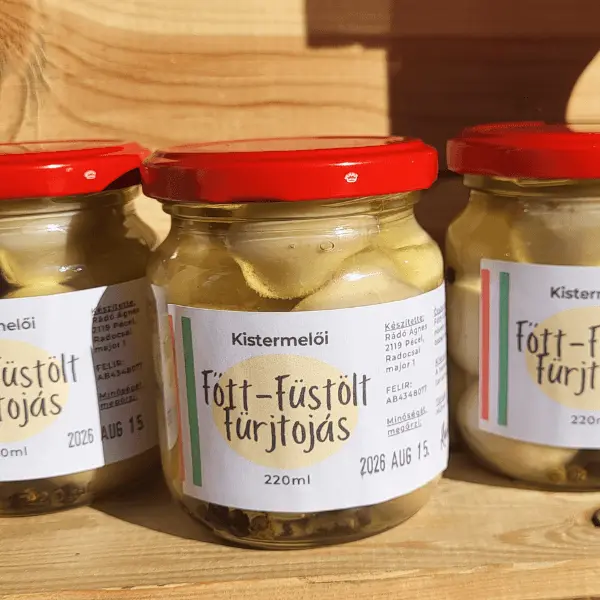
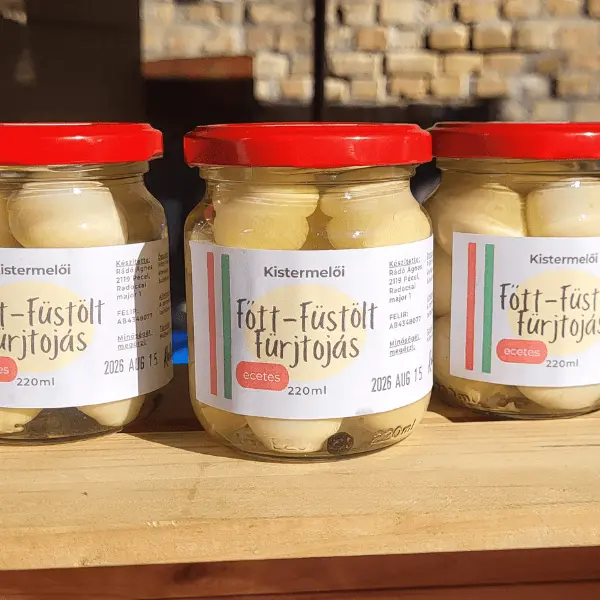
On our farm in Pécel, you can see the quail and day-old chicks and, in season, peek into the incubator. And if you would like to taste their eggs, you will find those here too.
Sources
- National Research Council: Microlivestock: Little-Known Small Animals with a Promising Economic Future, Chapter 15: Quail. National Academies Press, 1991. nap.nationalacademies.org
- Jacob J. (University of Kentucky), McCrea B. (Delaware State University): Raising Japanese Quail in Small and Backyard Flocks. Poultry Extension. poultry.extension.org
- Unicode Consortium: Egyptian Hieroglyphs, U+13171 EGYPTIAN HIEROGLYPH G043. unicode.org
- National Audubon Society: The Amazing Story of the Cold War Space-Egg Race. audubon.org
- Lovell P. G., Ruxton G. D., Langridge K. V., Spencer K. A.: Egg-laying substrate selection for optimal camouflage by quail. Current Biology, 2013; 23(3): 260–264. doi.org/10.1016/j.cub.2012.12.031
- Research by Vince M. A. on the synchronised hatching of quail chicks (Animal Behaviour, 1960s), summarised and repeated in bobwhite quail: The Wilson Bulletin, 1969; 81(1): 79–86. sora.unm.edu (PDF)
- Habitat selection of the Common Quail Coturnix coturnix in an intensively managed agricultural environment (on the protection and population of the quail in Hungary). real.mtak.hu