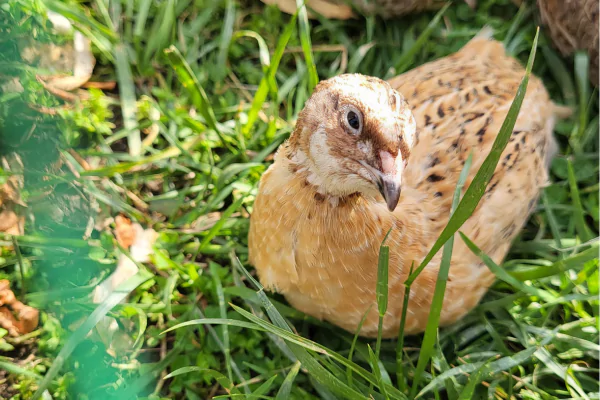
Expert recommendations for Japanese quail[1][2].
1. Where can I get quail?
Look for reliable breeders, for example at farmers' markets, in specialist groups or directly from farms. If you can, see the flock in person before you take any birds home.
What a healthy quail looks like
- lively, active and responsive to movement,
- clear, bright eyes and dry nostrils,
- smooth, intact feathers and a clean vent (under the tail feathers),
- smooth, undamaged feet with no swelling or sores,
- a clean, dry, uncrowded living area.
2. Male or female?
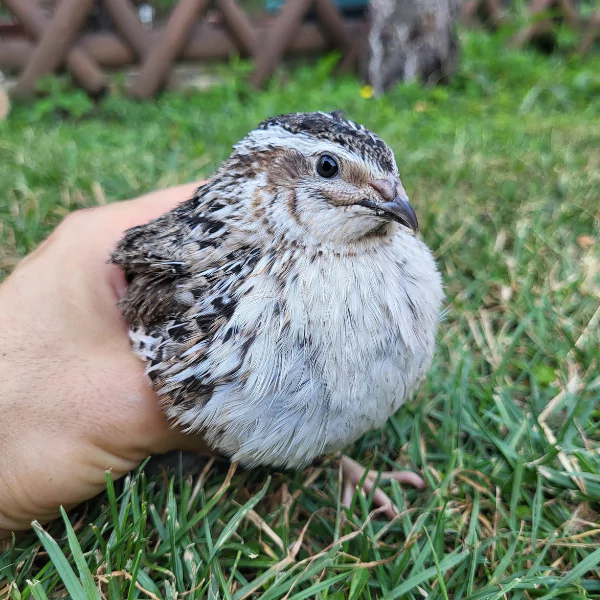
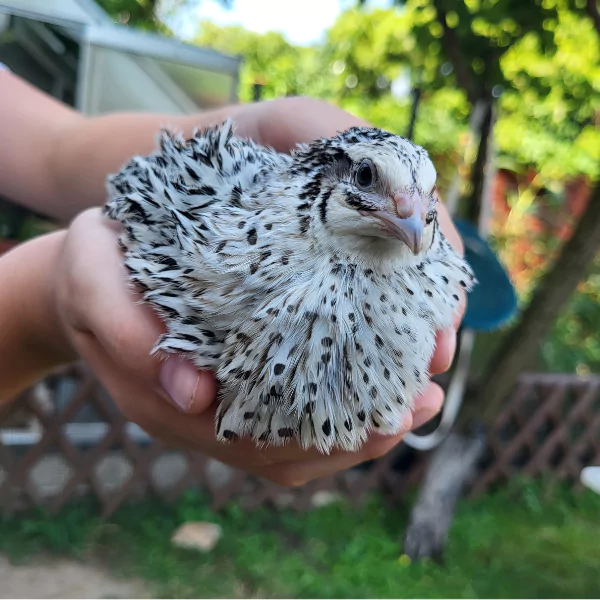
| Age | How to tell | Male | Female |
|---|---|---|---|
| From 3–4 weeks | feather colour (in wild-coloured quail) | plain, rusty brown breast | pale breast with dark speckles |
| From 6–7 weeks | vent | the gland above the vent produces white foam (when gently pressed or on droppings) | no foam |
| After sexual maturity | behaviour, sound | loud crowing, mounting females, sometimes aggression | quieter, starts laying |
3. What should I feed my quail?
Quail need much more protein than chickens: expert recommendations are feed with about 25% crude protein for growing birds and about 24% for laying hens[1]. Standard layer feed for chickens has much less protein than this, so feed made specifically for quail (or for game birds or turkeys) is best.
| Life stage | Protein | Calcium | What to look out for |
|---|---|---|---|
| Chicks and growers (0–6 weeks) | ~25% | ~1% | starter feed ground into fine crumbs |
| Layers (during the laying period) | ~24% | 2.5–3% | eggshells need a lot of calcium: oyster shell or limestone grit in a separate bowl |
Source: NSW Department of Primary Industries, Raising Japanese quail[1]. The classic reference on the nutrient requirements of quail is the handbook of the US National Research Council[3].
4. How should I give my quail water?
Quail drink a lot: they should always have fresh, clean water. For adults, a nipple drinker is the cleanest option, because bedding and droppings cannot get into it.
5. Where should I keep them?
In cages intensive
Pros
- controlled conditions, easy to keep clean,
- protected from predators and wild birds,
- a roll-away egg floor keeps the eggs clean.
Cons
- a less natural environment,
- a poor floor can cause foot injuries.
On the ground outdoors extensive
Pros
- a more natural life, more exercise,
- scratching, dust baths, greens.
Cons
- predators and wild birds (bird flu!),
- mud and damp: dirty eggs and sore feet,
- harder to keep clean.
- Space: each bird needs at least about 125–145 cm² of floor space (about 12×12 cm)[1]. This is the minimum, and more space is always better.
- Height: when frightened, a quail flies straight up and can hit its head on the top of the cage. A low cage or a soft net roof protects it from injury.
- Light: laying requires 14–18 hours of light a day[1][2]. That is why laying drops or stops in winter when the days are short, unless you add lighting.
- Dust bath: quail love bathing in dust, which also helps them care for their feathers. A tray of sand means a lot to them.
6. How do I put together a breeding flock?
Choose healthy, strong birds. Three females are typically kept with one male[1]: this way he fertilises the eggs without overworking the females. To avoid inbreeding, exchange males with other breeders from time to time.
7. How do I hatch the eggs?
Quail eggs take 17–18 days to hatch[1]. You will need an incubator: quail almost never sit on their eggs in captivity.
- Choosing eggs: use clean, undamaged, uncracked eggs that are no more than 10–14 days old.
- Marking and placing: mark one side of each egg so that you can see it has been turned. In an incubator with an automatic turner, stand them with the pointed end down.
- Turning: several times a day from day 3 to day 14. Stop turning after that[1].
- Candling: on days 8 and 14, shine a light through the eggs to spot infertile eggs and dead embryos.
- Before hatching: from day 15, chicks need a slightly lower temperature and higher humidity to be able to break out of the shell.
| Day | Temp. | Humidity | Turning | Airing | Candling |
|---|---|---|---|---|---|
| 1–2 | 37.8 °C | 60% | – | – | – |
| 3–5 | 37.8 °C | 60% | morning + evening | – | – |
| 6–7 | 37.8 °C | 60% | morning + evening | 20 min | – |
| 8 | 37.8 °C | 60% | morning + evening | 20 min | 1st candling |
| 9–11 | 37.8 °C | 60% | morning + evening | 20 min | – |
| 12–13 | 37.5 °C | 60% | morning + evening | 20 min | – |
| 14 | 37.5 °C | 60% | morning + evening | 20 min | 2nd candling |
| 15–17 | 37.2 °C | 75% | none | – | – |
| 17–19 | Chicks hatching 🐣 | ||||
The table shows the settings of our own incubator. The expert recommendation for a fan-assisted incubator is 37.5 °C (±0.3 °C) and 60% humidity up to day 14, then 37.2 °C and 70% until hatching[1]. Always follow the instructions for your incubator.
8. How do I raise quail chicks?
Quail chicks are precocial: just a few hours after hatching, they eat and drink on their own. For the first few weeks, however, they need warmth until their feathers grow in.
| Week | 1 | 2 | 3 | 4 | after |
|---|---|---|---|---|---|
| Temperature at chick level | ~35 °C | ~31.5 °C | ~28 °C | ~24.5 °C | room temperature |
The expert recommendation is about 35 °C in the first week, reduced by about 3.5 °C a week until the chicks are feathered at 3–4 weeks[1]. The best thermometer, however, is the chicks themselves:
Huddled under the heat
they are cold, so raise the temperature
Evenly spread out
just right
Panting, moving to the edges
they are too hot
- Feed: high-protein starter feed ground into fine crumbs.
- Feathering: rapid feathering starts in the second week, and by the end of the fourth week chicks have feathers like their parents'.
- Sexual maturity: Japanese quail mature at about 6 weeks, can lay at 7 weeks, and are in full production at about 50 days[1][2].
- Keeping males together: several males only get along if they grew up together. Otherwise, they may fight until they draw blood.
9. Health and disease prevention
- Bird flu: most importantly, quail should not come into contact with wild birds, and feeding and watering should take place under cover. During an outbreak, the authorities can order birds to be kept indoors, which is mandatory. In Hungary, Nébih publishes the current rules[4].
- Hygiene: wash your hands thoroughly before and after handling animals, and clean the cage and drinker regularly.
- Feet: muddy, wet or sharp-edged floors can cause foot injuries. Check the birds' feet regularly.
- Vet: if a bird sits listlessly with ruffled feathers and does not eat, or if several birds suddenly fall ill, ask a vet for help.
Ready to start?
We also offer male and female quail, day-old chicks and hatching eggs, and we are happy to tell you how to care for them.
Our own experience
Our first flock was one male and three females, so that they would have company without being too crowded. We bought them at the market and happily brought them home in a dog carrier. But when we finally got home, it turned out there had been a misunderstanding: we had been given not one male, but two!
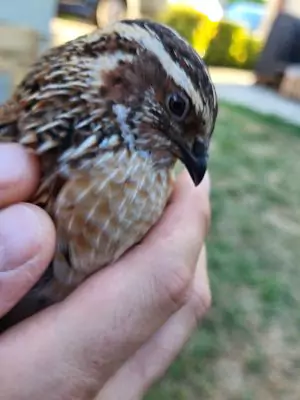
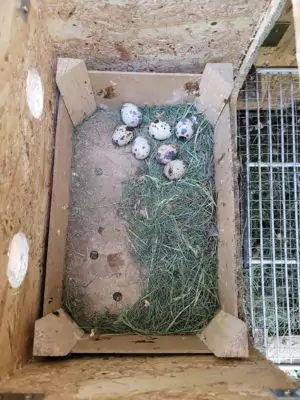
Our first step was to build them a comfortable pen next to the garage. We gave them lots of space and made sure they had a nest box and a run where they could graze freely on fresh grass.
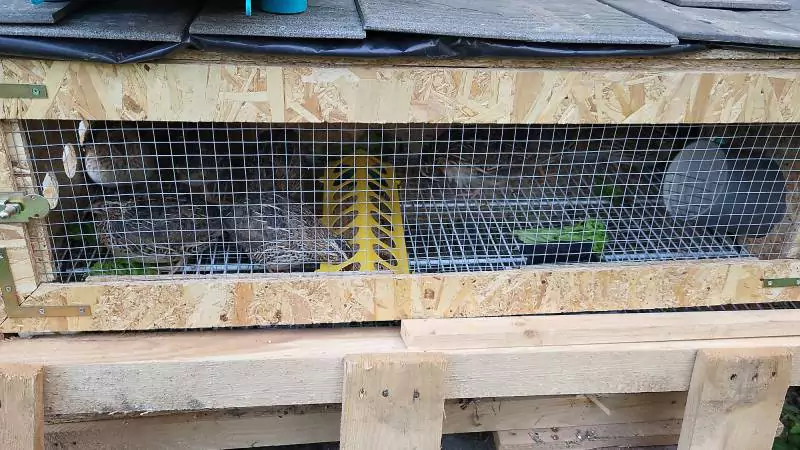
Although they loved being on the ground, we soon realised that mud and wet weather were not their best friends. Mud stuck to their feet and dried into hard balls, which made the birds suffer, and they often laid their eggs in the mud of the run instead of the nest, which was not very hygienic.
So we switched to raised cages with roll-away egg floors. This proved much more practical, and the quail were happier too, because they no longer had to walk around in their own droppings all day. We also set up small trays for dust baths, so that they could enjoy their favourite hobby.

Today they live in a larger, insulated quail house with room for 500 birds, which meets all their needs.
To be continued...
Frequently asked questions about keeping quail
How many quail should a beginner start with?
One male and three females are a good start: few enough to learn about their needs, and enough for them to have company.
How big a cage does a quail need?
Expert recommendations are at least about 125–145 cm² of floor space per bird (about 12×12 cm). In our experience, the more space a bird has, the better it feels. The cage should be low or have a soft roof, because a frightened quail flies straight up and can get hurt.
How many eggs does a quail lay?
In good conditions, a Japanese quail lays about 200–300 eggs in its first laying year. Laying requires 14–18 hours of light a day, so it drops in winter unless you add lighting.
When do quail start laying?
Japanese quail develop very quickly: they mature at about 6 weeks, can lay at 7 weeks, and are in full production at about 50 days.
How long does it take to hatch quail eggs?
17–18 days. Eggs must be turned several times a day up to day 14, but not after that, and they need higher humidity in the days before hatching.
Sources
- Randall M., Bolla G.: Raising Japanese quail (Primefact 602). NSW Department of Primary Industries, 2006. dpi.nsw.gov.au
- Jacob J. (University of Kentucky), McCrea B. (Delaware State University): Raising Japanese Quail in Small and Backyard Flocks. Poultry Extension. poultry.extension.org
- National Research Council: Nutrient Requirements of Poultry, 9th revised edition. National Academies Press, 1994. doi.org/10.17226/2114
- Hungarian National Food Chain Safety Office (Nébih): Bird flu – information for poultry keepers (in Hungarian). Nébih leaflet (PDF)